
Ask the Expert - Turbomachinery International
A Conversation on Bearings in Turbomachinery with Lou Krajewski
Learning Objectives
- Learn how higher speeds change bearing behavior, stability, and operating margins
- Recognize which early warning signs point to system-level issues rather than bearing design
- Understand which design and lubrication decisions matter most when performance limits tighten
TURBOMACHINERY INTERNATIONAL:
When people say “turbomachinery,” what changes for bearings as speeds climb?
KRAJEWSKI: When people talk about turbomachinery, the first thing I’d say is that bearings start to become a lot less forgiving. At lower speeds, the ability to generate sufficient oil films is really your limiting factor. Load and temperature are not as impactful. But as speeds climb, the bearings become a much bigger part of the machine’s dynamic behavior. Now you’re worrying about stability, heat generation, power loss, oil-film behavior, and how small changes in clearance or operating conditions could impact the whole system.
TURBOMACHINERY INTERNATIONAL:
If a machine is “not behaving,” how do you separate bearing issues from system issues?
KRAJEWSKI: If a machine is not behaving as expected, the first step is to resist the urge to blame the bearings just because that is where the symptoms show up. In turbomachinery, the bearings are part of the rotor system, so what looks like a bearing problem may actually be coming from misalignment, unbalance, lubrication issues, thermal distortion, bearing support conditions, or other system-level issues. The key is to look at the full array of information: vibration, temperature, load, speed, and any recent changes in how the machine is being run. Good troubleshooting is really about figuring out whether the bearing is the problem, or just the messenger.
TURBOMACHINERY INTERNATIONAL:
What trends are you seeing in turbomachinery that are pushing bearing limits right now?
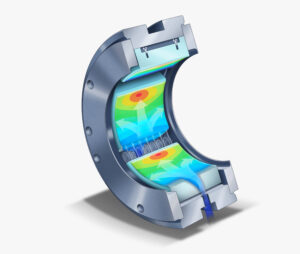
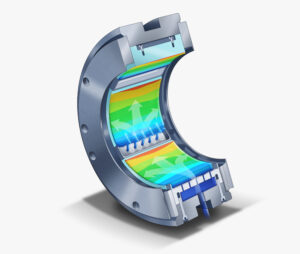
KRAJEWSKI: The biggest trend is that machines keep asking bearings to do more work at higher surface velocities, more load capacity, lower power loss. That combination is what really pushes the limits. This trend is not new in our industry. In fact, this trend is what led to the development of LEG® thrust and journal bearings in the 1980s and now continues to fuel our current R&D efforts today.
Aside from lubricant supply methods and optimum flow paths, attention in the industry has turned to things like alternative bearing lining materials and a deeper look into the lubricants themselves. In an industry that is as well-established as ours and one that is often very conservative, the goal is to continue operating within the industry-accepted limits. But the fun is in finding new opportunities to improve the machine performance within those limits.
TURBOMACHINERY INTERNATIONAL:
What, if any, differences exist in designing journal bearings versus thrust bearings in high-speed equipment?
KRAJEWSKI: In high-speed equipment, journal bearings usually require more engineering analysis because they are doing double duty: they have to carry the load obviously, but they also heavily influence the rotor’s dynamic behavior. A thrust bearing is certainly critical, but a journal bearing is often where stability, vibration, oil-film behavior, and thermal sensitivity all collide.
That means small decisions like bearing clearance, preload, pivot-type or lubrication method can change the way the whole machine behaves. This makes journal bearing design feel less like sizing a component and more like fine-tuning a system. It becomes a collaborative effort with the machine designer.
If you look at journal bearing development across the industry in the last 30 years, there is a noticeable uptick in creative solutions to these systematic challenges. Some are exceedingly complex and expensive while others look to keep things simple.
TURBOMACHINERY INTERNATIONAL:
Can you share an example where a simpler solution outperformed a complex one, and why?
KRAJEWSKI: There are many that come to mind, but a recent instance involved a high-speed compressor where the existing journal bearing arrangement was not meeting the predicted stiffness values across the full operating range. The existing design, while quite novel, is known to exhibit large reductions in stiffness due to dynamic changes that occur in operation.
We decided to approach it with a much simpler solution that was backed by a complex but validated analytical approach. While initially met with some skepticism, we applied the solution which was put through a fairly rigorous test campaign at our customer’s facility. At the end of the day, the bearing behaved exactly as predicted and even allowed this particular machine to significantly increase its operating range.
I suppose the moral of the story in this case is that sometimes, less is more.
TURBOMACHINERY INTERNATIONAL:
What does a strong customer-engineering collaboration look like when you are trying to widen operating margin?
KRAJEWSKI: Collaboration is really about iteration and transparency through communication. We may look at several bearing design paths, compare and contrast them, and challenge assumptions that seem intuitive but don’t hold up at high speeds.
In many cases, widening operating margin is less about adding complexity and more about aligning the bearing design with the machine’s real behavior. When the customer brings their own application knowledge and experience and we bring our bearing expertise, analysis, field experience, and test data, you get to a solution faster and usually to one that is more robust over the full operating range.
Inevitably, when a challenge pushes beyond current experience, that shared understanding becomes even more important. It creates a true engineering partnership focused on solving the problem together.
Lou Krajewski
Director of Engineering, Kingsbury, Inc.
Lou Krajewski began his career at Kingsbury in 2009 as a Design Engineer responsible for hydrodynamic bearing designs in highly engineered applications. Since then, his role has expanded to support a wide range of hydrodynamic bearing applications across fossil and hydroelectric power generation, as well as petrochemical and process machinery industries. Lou has traveled extensively throughout the United States, Europe, and Asia to educate users and provide on-site technical support for Kingsbury products.

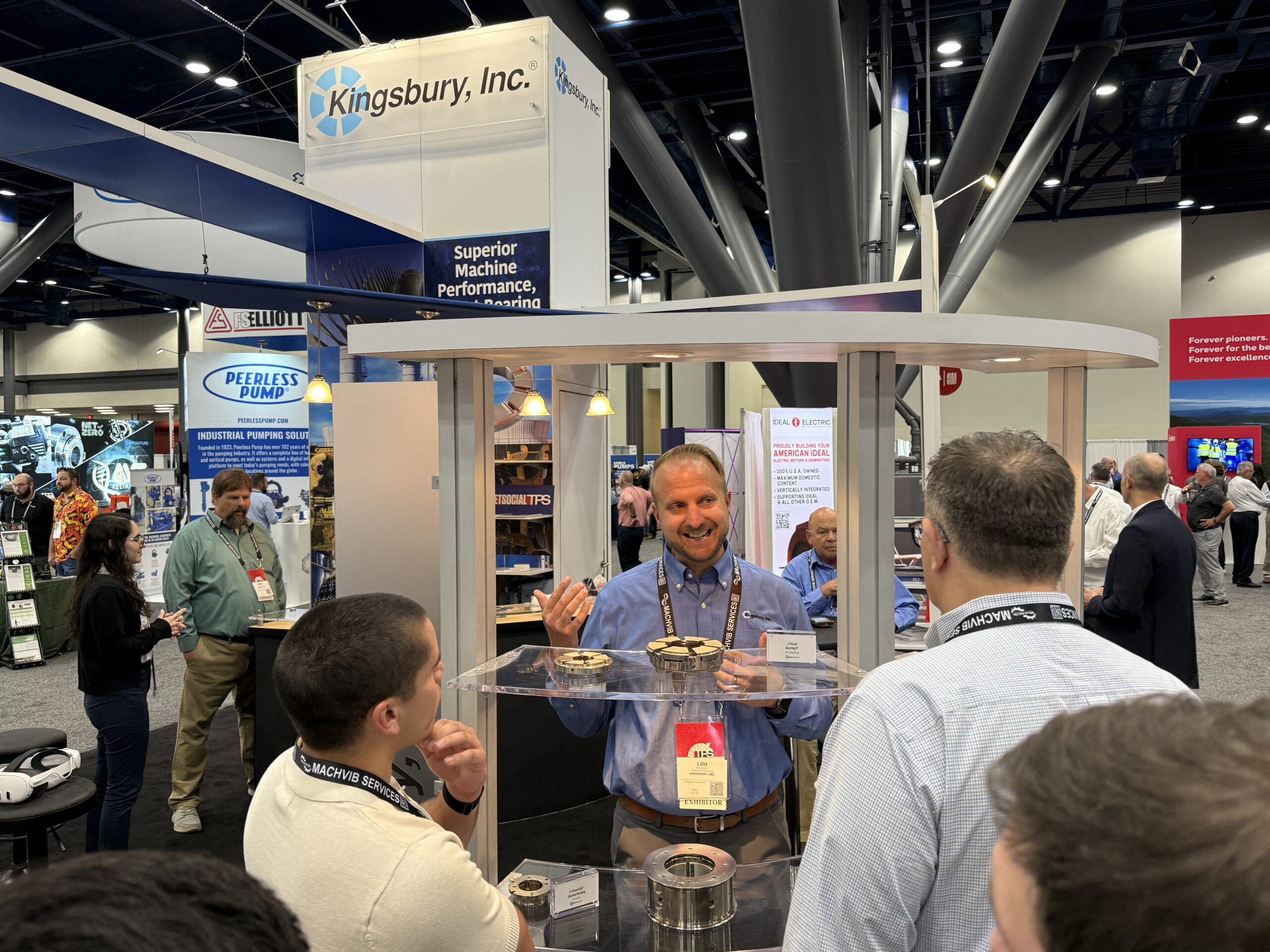
Lou Krajewski, Director of Engineering, Kingsbury, Inc.
 Read Online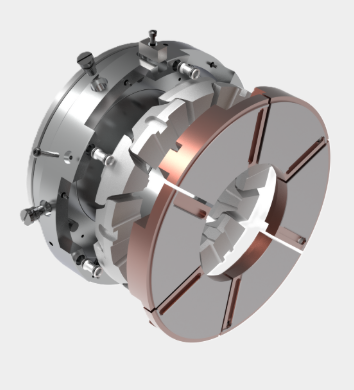
CrCu LEG Thrust Bearing.
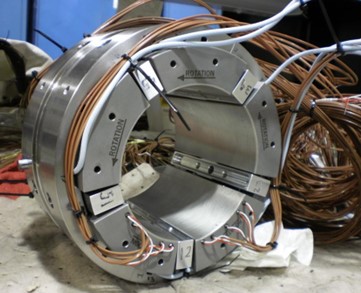
A journal bearing wired for bench-testing.
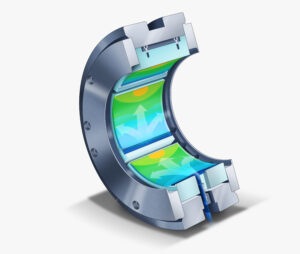
Three Kingsbury tilting pad journal bearings with
different oil flow-path designs, each optimized for
different operating conditions.